Pain Assessment in Hospice and Palliative Care: Why More Opioids Are Not Always the Answer
One of the most challenging situations encountered by hospice and palliative care clinicians is the patient who continues to report severe pain despite receiving multiple opioid medications. The natural response is often to increase the opioid dose. Families frequently request stronger medications, patients report persistent pain scores of 8/10 or 10/10, and clinicians feel pressure to provide immediate relief.
However, effective pain management requires far more than simply escalating opioid therapy.
In hospice and palliative care, our responsibility is not only to relieve suffering but also to ensure that treatments remain safe, appropriate, and aligned with the patient’s goals of care. This requires a thoughtful, comprehensive pain assessment that evaluates the entire clinical picture rather than focusing solely on a numerical pain score.
The Problem with Pain Scores Alone
Many clinicians have been trained to view pain as the “fifth vital sign.” While pain scores can be useful, they are only one piece of the assessment.
Consider two patients who both report pain as 8/10.
The first patient is grimacing, unable to sleep, refusing movement, eating poorly, and experiencing obvious distress.
The second patient is sitting comfortably in a recliner, watching television, conversing normally, sleeping throughout the night, and participating in daily activities.
Both report the same pain score, yet their functional status and symptom burden are dramatically different.
Pain is subjective and should always be believed. However, pain assessment should never stop at the numerical rating. The question is not simply, “How much pain are you having?” The more important question is:
“How is this pain affecting your life?”
The First Step: Identify the Pain Generator
Before adjusting medications, clinicians should determine exactly what type of pain is being treated.
Questions should include:
- Where is the pain located?
- When did it begin?
- Has it changed recently?
- What makes it better?
- What makes it worse?
- Is it constant or intermittent?
- What words does the patient use to describe the pain?
Pain type matters because different pain syndromes respond differently to opioids.
Nociceptive Pain
Examples include:
- Bone metastases
- Fractures
- Soft tissue injury
- Organ capsule distention
These pain syndromes often respond well to opioid therapy.
Neuropathic Pain
Examples include:
- Diabetic neuropathy
- Post-herpetic neuralgia
- Radiculopathy
- Nerve compression
Neuropathic pain often responds incompletely to opioids and may require adjuvant medications such as gabapentin, pregabalin, duloxetine, or tricyclic antidepressants.
Chronic Musculoskeletal Pain
Examples include:
- Osteoarthritis
- Degenerative disc disease
- Chronic low back pain
- Myofascial pain syndromes
These conditions frequently demonstrate limited improvement with escalating opioid doses and often benefit from multimodal management strategies.
Functional Assessment: The Most Underutilized Pain Tool in Hospice
One of the most valuable aspects of pain assessment is evaluating function.
Rather than asking only about pain intensity, clinicians should ask:
- Is pain interfering with sleep?
- Is pain limiting transfers?
- Is pain preventing ambulation?
- Is pain affecting appetite?
- Is pain reducing participation in meaningful activities?
- Has pain resulted in social withdrawal?
Documenting functional impairment provides a much clearer picture of symptom burden than a numerical rating alone.
In hospice care, our goal is not necessarily a pain score of zero.
Our goal is comfort sufficient to allow meaningful participation in life while minimizing treatment burden.
Understanding the Risks of Opioid Escalation
Many hospice patients receive multiple opioid formulations simultaneously, including:
- Long-acting opioids
- Short-acting opioids
- Breakthrough medications
When patients continue reporting pain, clinicians may feel compelled to increase doses.
However, escalating opioids carries significant risks:
- Sedation
- Delirium
- Falls
- Respiratory depression
- Constipation
- Urinary retention
- Reduced quality of life
- Increased caregiver burden
Importantly, higher opioid doses do not guarantee better pain control.
Several studies have demonstrated diminishing analgesic returns as opioid doses increase, particularly for chronic non-cancer pain and musculoskeletal pain syndromes.
Assess Actual Medication Use Before Adjusting Orders
One of the most common mistakes in hospice pain management is increasing medications before determining how much medication the patient is actually using.
A complete assessment should include:
Scheduled Medications
- Is the long-acting opioid being taken consistently?
- Are doses being missed?
Breakthrough Medications
- How many doses are being used daily?
- At what times?
- What activities trigger breakthrough pain?
Total Daily Opioid Burden
Providers should calculate:
- Total opioid consumption over the previous 24–72 hours
- Morphine milligram equivalents (MME)
- Patterns of medication utilization
Many patients report uncontrolled pain while taking very little breakthrough medication. Others may be taking substantially more medication than clinicians realize. Objective medication utilization data is essential before making changes.
Recognizing Chemical Coping
Hospice clinicians frequently encounter patients who use opioids for reasons beyond physical pain.
This phenomenon is often referred to as “chemical coping.”
Chemical coping is distinct from addiction.
It occurs when medications are used to manage:
- Anxiety
- Fear
- Loneliness
- Depression
- Boredom
- Existential distress
- Fear of dying
Potential warning signs include:
- Persistent requests for stronger medications
- Reports that medications “never work”
- Requests for early refills
- Escalating use despite stable disease
- Pain reports inconsistent with observed function
Recognizing chemical coping does not mean dismissing patient concerns. Rather, it means identifying other forms of suffering that may require different interventions.
Total Pain: Dame Cicely Saunders’ Enduring Contribution
Perhaps the most important concept in hospice and palliative care is Dame Saunders’ concept of “total pain.”
Patients experience suffering across multiple domains:
Physical Pain
Disease-related symptoms and bodily discomfort.
Psychological Pain
Anxiety, depression, grief, and fear.
Social Pain
Caregiver stress, family conflict, isolation, financial concerns.
Spiritual Pain
Questions regarding meaning, purpose, forgiveness, and mortality.
Escalating opioid doses may address physical pain while leaving the remaining sources of suffering untreated.
Comprehensive assessment helps clinicians identify which domains require intervention.
Opioid-Induced Hyperalgesia: When More Causes More
One frequently overlooked phenomenon is opioid-induced hyperalgesia (OIH).
OIH occurs when prolonged opioid exposure paradoxically increases pain sensitivity.
Potential signs include:
- Worsening pain despite increasing opioid doses
- Pain becoming more diffuse
- Heightened sensitivity to touch
- Increasing pain reports without objective disease progression
While uncommon, OIH should be considered whenever escalating opioids fail to produce meaningful improvement.
Non-Pharmacologic Interventions Matter
Hospice clinicians should never underestimate the value of simple interventions.
These may include:
Physical Measures
- Repositioning
- Pressure redistribution
- Heat therapy
- Cold therapy
- Gentle stretching
- Massage
Topical Treatments
- Lidocaine patches
- Lidocaine cream
- Diclofenac gel
- Menthol-based preparations
Environmental Measures
- Improved sleep hygiene
- Relaxation techniques
- Guided imagery
- Music therapy
Psychosocial Support
- Social work involvement
- Chaplain visits
- Counseling
- Family meetings
Often these interventions provide substantial benefit while avoiding medication-related complications.
The Hospice Provider’s Responsibility
Hospice providers must balance two equally important responsibilities:
- Relieving suffering.
- Preventing avoidable harm.
Neither extreme serves patients well.
Undertreated pain is unacceptable.
However, indiscriminate opioid escalation without comprehensive assessment can also cause significant harm.
The best pain management decisions arise from careful assessment, thoughtful clinical reasoning, and a commitment to understanding the full experience of the patient.
Key Takeaways for Hospice and Palliative Care Clinicians
Before increasing opioid doses, always ask:
- What type of pain am I treating?
- Is the pain related to disease progression?
- How is pain affecting function?
- What medications is the patient actually using?
- Are there signs of opioid toxicity?
- Could anxiety, depression, or existential distress be contributing?
- Are non-pharmacologic interventions being utilized?
- Is opioid-induced hyperalgesia a possibility?
Most importantly, remember that our goal is not necessarily the complete elimination of pain.
Our goal is to help patients achieve meaningful comfort, preserve dignity, maintain function when possible, and maximize quality of life throughout their hospice journey.
Effective pain management begins not with the prescription pad—but with a comprehensive assessment.
—————————————————————————————————————
Understanding Dame Cicely Saunders and the Concept of Total Pain
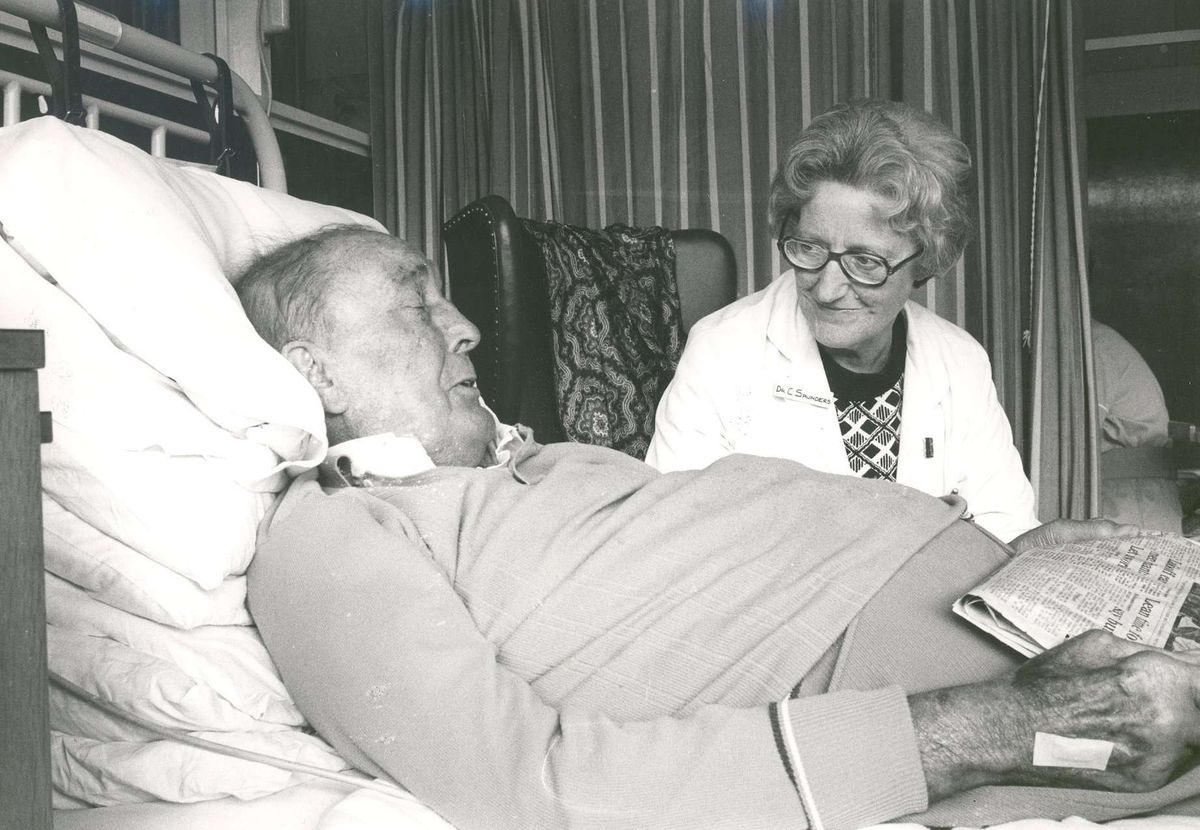
No discussion of pain management in hospice and palliative care would be complete without acknowledging the groundbreaking work of Dame Cicely Saunders, whose contributions fundamentally changed how clinicians understand suffering at the end of life.
Who Was Dame Cicely Saunders?
Dame Cicely Mary Strode Saunders (1918–2005) was a British nurse, medical social worker, physician, author, and educator who is widely recognized as the founder of the modern hospice movement. Her unique professional journey allowed her to view serious illness through multiple lenses—clinical, psychosocial, and humanistic.
Saunders initially trained as a nurse during World War II but was forced to leave bedside nursing because of chronic back problems. She subsequently trained as a medical social worker, where she spent years caring for patients with advanced illness. During this work, she became increasingly aware that many dying patients were experiencing profound suffering that extended far beyond their physical symptoms.
Determined to improve care for patients nearing the end of life, Saunders returned to medical school and qualified as a physician in 1957. She devoted her career to studying pain, symptom management, and the broader experience of suffering among patients with terminal illness.
Her vision culminated in the founding of St. Christopher’s Hospice in London in 1967, the world’s first modern hospice. St. Christopher’s became an international model for compassionate end-of-life care, combining expert symptom management, interdisciplinary teamwork, family support, education, and research. The principles established there continue to shape hospice and palliative care programs throughout the world today.
Major Contributions to Hospice and Palliative Care
Saunders’ achievements transformed medicine and include:
- Founding the modern hospice movement.
- Establishing St. Christopher’s Hospice as a model of interdisciplinary end-of-life care.
- Advancing scientific approaches to pain and symptom management.
- Promoting regular, scheduled opioid administration rather than waiting for severe pain to develop.
- Integrating nursing, medicine, social work, chaplaincy, and bereavement support into patient care.
- Establishing hospice as both a clinical and academic discipline.
- Influencing the development of palliative care programs worldwide.
- Advocating for patient dignity, autonomy, and quality of life regardless of prognosis.
Perhaps her most enduring legacy is her recognition that suffering is multidimensional and cannot always be relieved through medications alone.
The Concept of Total Pain
Saunders observed that some patients continued to suffer despite adequate treatment of their physical symptoms. Through careful observation and patient interviews, she recognized that pain often encompasses much more than tissue injury or disease progression.
She introduced the concept of “Total Pain,” which describes suffering as a combination of four interconnected domains:
Physical Pain
The bodily symptoms associated with disease or injury.
Examples include:
- Cancer pain
- Dyspnea
- Arthritis
- Wounds
- Fatigue
- Nausea
Psychological Pain
Emotional distress that amplifies the patient’s experience of suffering.
Examples include:
- Anxiety
- Depression
- Fear
- Anger
- Loss of independence
- Uncertainty about the future
Social Pain
Distress arising from relationships and social circumstances.
Examples include:
- Caregiver burden
- Family conflict
- Financial concerns
- Social isolation
- Loss of meaningful roles
- Feeling like a burden to others
Spiritual or Existential Pain
Questions related to meaning, purpose, faith, identity, and mortality.
Examples include:
- “Why is this happening to me?”
- Fear of death
- Unresolved guilt
- Loss of meaning or purpose
- Concerns regarding legacy
- Religious or spiritual struggles
Why Total Pain Matters in Hospice Practice
The concept of Total Pain remains one of the most important frameworks in hospice and palliative medicine.
For example, a patient with advanced heart failure may repeatedly request escalating opioid doses. While some of the suffering may be related to physical symptoms, a comprehensive assessment may reveal significant anxiety, loneliness, grief, caregiver stress, or fear of dying.
In these situations, increasing opioid doses alone may provide little benefit because the primary drivers of suffering are psychological, social, or spiritual rather than physical.
Addressing Total Pain often requires involvement from the entire interdisciplinary team, including:
- Nurses
- Physicians
- Social workers
- Chaplains
- Bereavement counselors
- Hospice aides
- Volunteers
- Therapists
This holistic approach remains one of the defining characteristics of hospice care.
Cicely Saunders’ Enduring Message
Saunders believed that every patient deserved dignity, comfort, and compassionate care throughout the final chapter of life. Her philosophy is beautifully captured in one of her most frequently quoted statements:
“You matter because you are you, and you matter to the last moment of your life.”
More than half a century after the founding of St. Christopher’s Hospice, the principles developed by Dame Cicely Saunders continue to guide hospice and palliative care professionals around the world. Her concept of Total Pain reminds us that effective symptom management begins not with medications, but with understanding the whole person who is experiencing the illness.
References
American Academy of Hospice and Palliative Medicine (AAHPM) (2023) Statement on safe and appropriate opioid use in hospice and palliative medicine.
American Geriatrics Society Panel on Persistent Pain in Older Persons (2009) ‘Pharmacological management of persistent pain in older persons’, Journal of the American Geriatrics Society, 57(8), pp. 1331–1346.
Ballantyne, J.C. and Shin, N.S. (2008) ‘Efficacy of opioids for chronic pain: A review of the evidence’, Clinical Journal of Pain, 24(6), pp. 469–478.
Bruera, E. and Paice, J.A. (2015) ‘Cancer pain management: Safe and effective use of opioids’, American Society of Clinical Oncology Educational Book, 35, pp. e593–e599.
Busse, J.W., Wang, L., Kamaleldin, M., Craigie, S., Riva, J.J., Montoya, L., Mulla, S.M., Lopes, L.C., Vogel, N., Chen, E., Kirmayr, K., De Oliveira, K., Olivieri, L., Kaushal, A., Chaparro, L.E., Oyberman, I., Agarwal, A., Couban, R., Tsoi, L., Lam, T., Furukawa, T.A. and Guyatt, G.H. (2018) ‘Opioids for chronic noncancer pain: A systematic review and meta-analysis’, JAMA, 320(23), pp. 2448–2460.
Centers for Disease Control and Prevention (CDC) (2022) CDC clinical practice guideline for prescribing opioids for pain — United States, 2022. MMWR Recommendations and Reports, 71(3), pp. 1–95.
Chou, R., Turner, J.A., Devine, E.B., Hansen, R.N., Sullivan, S.D., Blazina, I., Dana, T., Bougatsos, C. and Deyo, R.A. (2015) ‘The effectiveness and risks of long-term opioid therapy for chronic pain: A systematic review for a National Institutes of Health Pathways to Prevention Workshop’, Annals of Internal Medicine, 162(4), pp. 276–286.
Colloca, L., Ludman, T., Bouhassira, D., Baron, R., Dickenson, A.H., Yarnitsky, D., Freeman, R., Truini, A., Attal, N., Finnerup, N.B. and Eccleston, C. (2017) ‘Neuropathic pain’, Nature Reviews Disease Primers, 3, Article 17002.
Dalal, S. and Bruera, E. (2017) ‘Assessment and management of pain in the terminally ill’, Primary Care: Clinics in Office Practice, 38(2), pp. 195–223.
Tompkins DA, Campbell CM. Opioid-induced hyperalgesia: clinically relevant or extraneous research phenomenon? Curr Pain Headache Rep. 2011 Apr;15(2):129-36.
Clark D. (2018). Cicely Saunders: A Life and Legacy. Oxford University Press.
Clark David`Total pain', disciplinary power and the body in the work of Cicely Saunders, 1958–1967, Social Science & Medicine, Volume 49, Issue 6, 1999, Pages 727-736.