Part 1 of 2: More Than a Life Review: How Dignity Therapy Helps Patients Leave Their Legacy

"Everyone wants to know that their life mattered."
As clinicians, we spend much of our time asking patients about symptoms.
Where does it hurt?
How severe is your shortness of breath?
Have you fallen?
What did you eat today?
These are necessary questions. They guide treatment and keep patients safe.
But they rarely answer the question that matters most near the end of life:
"Who am I beyond this illness?"
That is where Dignity Therapy enters the conversation.
Developed more than twenty years ago by psychiatrist and palliative care researcher Dr. Harvey Max Chochinov, Dignity Therapy is one of the most extensively studied psychosocial interventions in palliative care. Rather than focusing on symptoms, it focuses on identity, meaning, purpose, and legacy. The result is something profoundly human—a conversation that becomes a gift for the people left behind.
What Exactly Is Dignity Therapy?
Dignity Therapy is a brief, structured psychotherapy designed for people with serious illness, particularly those approaching the end of life.
Through a guided interview, patients reflect on questions such as:
- What are you most proud of?
- What roles have been most important in your life?
- What lessons would you like to pass on?
- Are there things you would like your loved ones to remember?
- What hopes do you have for those you leave behind?
The conversation is recorded, transcribed, carefully edited, and returned to the patient as a polished "generativity document." The patient decides who receives it—children, spouses, grandchildren, or anyone else important in their lives.
Unlike a simple life review, Dignity Therapy intentionally creates a lasting legacy.
It allows patients to say the things that often remain unsaid.
{Personal side bar– I enjoyed doing this in my Palliative Medicine Fellowship and it created a lasting legacy for patients and for myself. I've intentionally incorporated questions into my practice though I do not perform the full book}
Why It Matters
Serious illness threatens much more than physical function.
Patients lose independence.
They lose familiar roles.
They lose certainty.
Sometimes they even begin to lose their sense of identity.
Many describe feeling like they have become "just another patient."
Dignity Therapy seeks to restore personhood by reminding individuals—and their families—that they are much more than a diagnosis. It addresses what Dr. Chochinov describes as threats to dignity by reinforcing meaning, continuity, purpose, and generativity.
What Does the Evidence Show?
Since its original publication in 2005, Dignity Therapy has been studied around the world and adapted across cultures, illnesses, and care settings.
Research has demonstrated that patients frequently report:
- greater sense of meaning
- improved quality of life
- enhanced spiritual well-being
- reduced existential suffering
- less hopelessness and demoralization
- improved family communication
- high satisfaction with the intervention
Perhaps even more striking, family members often describe the legacy document as one of their most treasured possessions after their loved one dies.
Importantly, not every randomized trial has shown improvements in traditional measures such as depression or anxiety scores. Dr. Chochinov himself has noted that the value of Dignity Therapy extends beyond symptom scales. Some of its greatest benefits—affirming identity, strengthening relationships, and creating an enduring legacy—are difficult to capture with conventional research instruments.
When Should We Offer Dignity Therapy?
Many clinicians mistakenly think Dignity Therapy should only be offered during the final days of life.
In reality, earlier is often better.
Ideal candidates include patients who:
- recognize they have a life-limiting illness
- have the cognitive ability to participate in conversation
- express concerns about legacy, meaning, or unfinished business
- want to leave messages for family members
- ask reflective questions such as, "Will they remember me?" or "What will happen after I'm gone?"
Waiting until someone is actively dying may mean they are simply too fatigued or cognitively impaired to participate.
Is This Something Every Clinician Can Do?
Yes—and no.
Formal Dignity Therapy is a structured therapeutic intervention. Dr. Chochinov has emphasized that effective delivery requires training, thoughtful interviewing, careful editing, and fidelity to the established process. Training programs have been developed to improve consistency and reproducibility across clinicians.
However, every clinician can practice dignity-conserving care.
You don't need a recorder or a transcript to ask questions that honor the person sitting in front of you.
Instead of asking only:
"How is your pain today?"
Try asking:
"Tell me something about yourself that your illness hasn't changed."
Or:
"What would you want your grandchildren to know about you?"
Or:
"What are you most proud of?"
Sometimes those two extra minutes become the most therapeutic part of the visit. A follow up piece to this article (coming next week) will explore some questions you can ask.
Bringing Dignity Therapy Into Everyday Hospice Practice
Every member of the interdisciplinary team can borrow elements of the Dignity Therapy framework.
Physicians can ask one legacy question during recertification or goals-of-care discussions.
Nurses often hear meaningful stories during routine visits. Instead of letting those stories disappear, they can encourage patients to elaborate.
Social workers naturally explore identity, family dynamics, and unfinished business.
Chaplains frequently help patients connect their life story with meaning and spirituality.
Hospice aides may be uniquely positioned to hear stories that patients have never shared with anyone else.
Even if a formal generativity document is never created, these conversations communicate something powerful:
"I see you as a person—not just as a patient."
Technology Can Help Preserve a Legacy
One exciting development is the emergence of technology that makes legacy work more accessible.
Platforms such as Remento guide families through meaningful interview questions, automatically transcribe recorded conversations, and use artificial intelligence to transform spoken stories into beautifully organized keepsake books. While this is not a replacement for formal Dignity Therapy, it can be an excellent option for families who want to preserve memories before they are lost.
For patients who may not have access to a trained Dignity Therapy clinician, tools like these can offer another pathway to capturing stories, wisdom, humor, and family history.
The Greatest Gift We Can Offer
Near the end of life, patients often worry less about dying than about being forgotten.
They wonder:
Did my life matter?
Will anyone remember me?
Have I said everything that needed to be said?
As hospice and palliative care clinicians, we cannot change the fact that life ends.
But we can help ensure that a person's story continues.
Sometimes the most healing intervention isn't another medication.
Sometimes it's giving someone permission—and the opportunity—to tell the story of their life.
Further Reading:
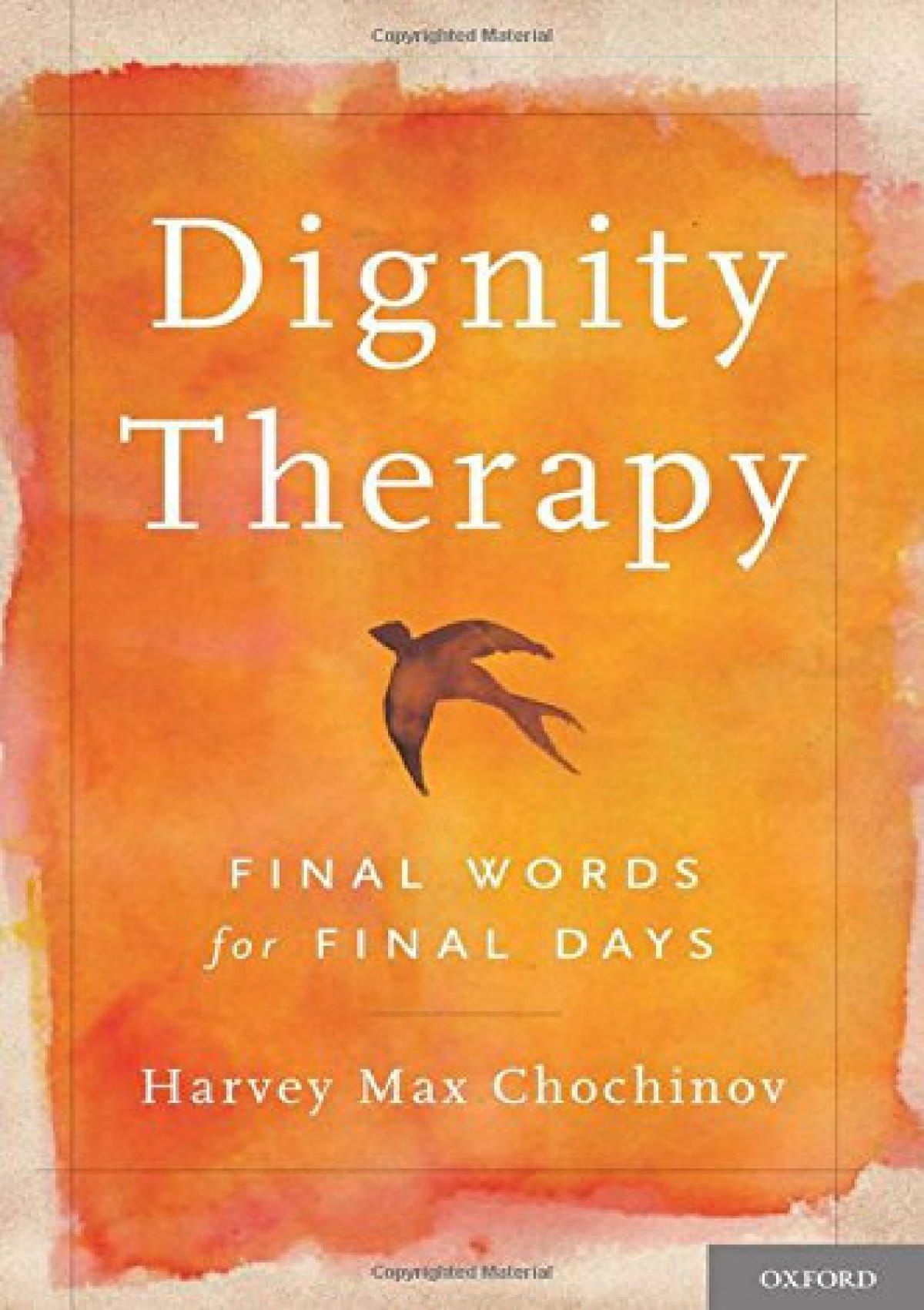
Chochinov HM. Dignity Therapy: Final Words for Final Days. New York, NY: Oxford University Press; 2012. Order Book here: English


References
- Wulandari BT, Rochmawati E. Effectiveness of dignity therapy on well-being among patients under palliative care: A systematic review and meta-analysis. International Journal of Nursing Studies. 2024.
- Chochinov HM, Kristjanson LJ, Breitbart W, et al. Effect of dignity therapy on distress and end-of-life experience in terminally ill patients: A randomized controlled trial. The Lancet Oncology. 2011.
- Xiao J, Chow KM, Liu Y, Chan CWH. Effects of dignity therapy on dignity, psychological well-being, and quality of life among palliative care cancer patients: A systematic review and meta-analysis. Psycho-Oncology. 2019.
- Chochinov HM. Twenty Years of Dignity Therapy: Evidence, Challenges, and Implications for Person-Centered Care. Journal of Palliative Medicine. 2026.
- Chochinov HM, Hack T, Hassard T, et al. Dignity Therapy: A Novel Psychotherapeutic Intervention for Patients Near the End of Life. Journal of Clinical Oncology. 2005.
- Wilkie DJ, Fitchett G, Yao Y, et al. Engaging Mortality: Effective Implementation of Dignity Therapy. Journal of Palliative Medicine. 2024.
- Li Y, Li X, Hou L, et al. Effectiveness of dignity therapy for patients with advanced cancer: A systematic review and meta-analysis of 10 randomized controlled trials. Depression and Anxiety. 2020.
- Bluck S, Koch MK, Yao Y, et al. Mechanisms of Dignity Therapy: Positive Outcomes in Older Cancer Patients. Journal of Palliative Medicine. 2026.
- Julião M, Johnston B, Antunes B. Dignity Therapy—Past, Present and Future Journey: Beyond End-of-Life Cancer Care. Responding to Grassi et al. Psycho-Oncology. 2022.
- Chiu TY, Lai WS, Fan SY, Fang SY, Liu YH. Cultural Acceptability and Potential Effectiveness of Dignity Therapy for Patients With Terminal Cancer in Taiwan: A Quasi-Experimental Study. European Journal of Oncology Nursing. 2026.
- Lopes D, Oliveira I, Cruz A, et al. Meaning-centered psychotherapy versus dignity therapy for spiritual well-being in patients with cancer: A systematic review and meta-analysis. Journal of Clinical Oncology. 2026.


