The Untapped Asset in Patient Care
If you are a healthcare professional and feel put upon, underappreciated, overlooked, and taken for granted by administration, it is entirely valid. Many administrators on both the provider and payer side of healthcare fail to recognize that without the talent, the show simply cannot go on. Unlike Broadway and Hollywood, there aren’t hundreds of other actors just waiting for their chance.
I have been a healthcare consultant and administrator who has also been on the physician side personally. I was first married to the son and nephew of two nationally renowned obstetrician gynecologists and sat at the dinner table weekly with my father-in-law sharing stories about his practice. Later I was married to a 30+ year plastic surgeon who, following a neck injury, had retrained in palliative medicine and hospice. Every evening, we sat at the dinner table and talked about his work, the patients, and their families.
Professionally and personally, I saw the same mistake repeated: treating healthcare professionals as though they are replaceable. I can assure you the mistake is not new although recently the degree of ignorance does seem to have reached exceptional lows. While I feel I have been aware of the talent factor throughout my career, I am certain there were instances I was observed as not understanding it or did, in fact, overlook it.
It's painful to realize we are making the same mistakes we despise in others but if we don't face them, we fail to learn and grow and that is far more despicable than the mistake itself.
That realization led me to notice something else. Just as administrators undervalue clinicians, clinicians themselves often overlook and undervalue another critical member of the care team, the family caregiver.
The Invisible Workforce
There are 65 million family caregivers in the U.S. today, up from 55 million just five years ago.[1] Another term often used to describe them is uncompensated caregivers.
I know this role. My brother, mother, husband, and father all died following illness or injury. With three of the four, I was the one and only family caregiver.
To help physicians understand what it is like to be a family caregiver, I ask them to close their eyes and take a deep breath. Think back to the July and August of their PGY1. (At this point in the exercise their eyes pop open with all the anxiety of that time.) They have just gotten back to the on-call room after hours of in-house patient visits and the instant their weary head hits the pillow, the pager or phone rings. They have started to wonder if there is a surveillance camera in the on-call room because it feels like the precise instant, they close their eyes for badly needed sleep, they are called. The level of fatigue and apprehension is indescribable.
Now imagine that same level of exhaustion and anxiety but:
- without four years of medical school
- without chiefs, faculty, or veteran nurses to catch your mistakes
- without ACGME vacation and 80-hour work-week protections
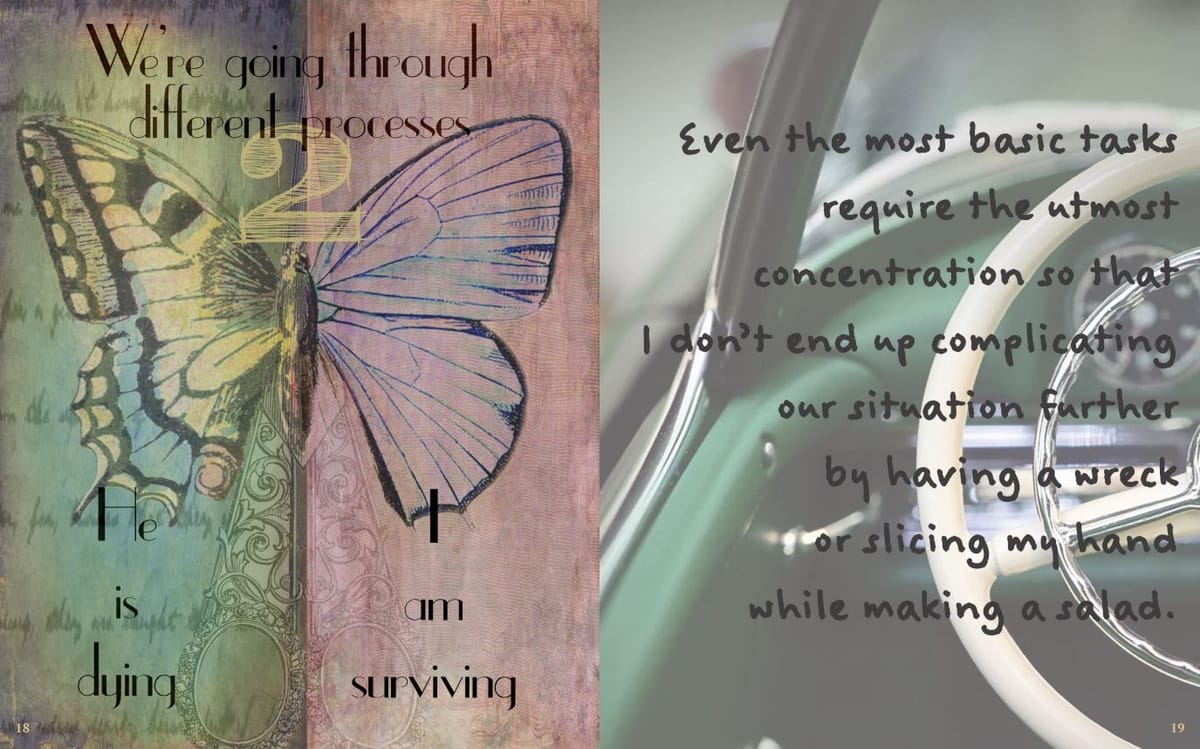
You have just one patient and they mean the world to you. Deep down you know they will die, but no one will talk with you about it. You hope nothing you do—or fail to do—will make their death or the time you have left together worse. You didn’t ask for this role. Every day you think, “I can’t do this anymore.” And still, you go on. The average duration of family caregiving is 5.5 years up from 4.5 years just five years ago.[1] That’s a long time to do such heart and back breaking work and it ends with the death of your loved one.
A Missed Asset
If you think I am overstating this or you would like to know more explore and download the Family Caregiver Position Description I created to help the world understand what the family caregiver job really is.
This is not about making healthcare professionals feel bad. The takeaway is that there is a skilled, experienced healthcare extender that has been entirely overlooked as the asset they are. They know when a patient who shows up clean-shaven and well-dressed was, just hours earlier, curled on the bathroom floor with fever, pain, and nausea. They notice the shifts in mood, appetite, or function that never make it into the exam room. They are the ones sitting awake at 2a, watching and worrying.
Tapping into this knowledge costs nothing. Ask the caregiver to linger for a moment after a visit and then ask:
- “From your perspective, how are things going?” OR
- “Did we leave anything out that you feel is important?”
Then listen. Be comfortable with silence. For many caregivers, this will be the first time anyone has asked. And, then, only if you mean it, ask: “How are you doing?” Ninety percent will respond, “I’m fine, just tired.” Your simple acknowledgment of them and their role matters. If the caregiver is unable to attend a visit with the patient, write them a note in MyChart or call them occasionally.
A Practical Step
Family caregivers can extend the reach of the clinical team if they are given direction. A short handout with specific ways they can help can be invaluable. Download the one that I created called How the Family Caregiver Can Help the Oncology Team. Create a similar family caregiver guide for your subspecialty. Use video if that is more comfortable for you. It shows caregivers that you see them and equips them to help.
The Bottom Line
Healthcare professionals deserve recognition and respect. So do the millions of family caregivers. See them as added set of eyes and ears who are with your patient for as much as 24 hours a day and accompany your patients in exam rooms, hospital rooms, living rooms, and bedrooms every day. They are not replaceable.
They are not optional; they are your partners.
References and Links
[1] AARP and National Alliance for Caregiving 2025 & 2020 Family Caregiving Survey Reports
2 resources for caregivers by Jen O'Brien:


