Muscle as Medicine in Palliative Care: Why Strength Matters for Our Patients


In palliative care, we often think first about symptom control, emotional support, and guiding patients and families through uncertainty. Yet there’s another piece of the puzzle that can have an enormous impact on quality of life: skeletal muscle.
Research has shown that muscle is not just about mobility or appearance—it is one of the strongest predictors of health, independence, and even survival. A large JAMA study found that adults with higher muscle mass had a significantly lower risk of death compared to those with low muscle mass. On the other hand, weakness and frailty are tied to higher rates of disability and earlier decline. For many of our patients, this plays out daily in the difference between being able to stand from a chair, transfer to the commode, or take a few steps with a walker—or becoming bedbound.
More Than Movement: Muscle as an Organ
What’s remarkable is that muscle does more than move us. It functions like an endocrine organ, releasing molecules called myokines when it’s activated. These signals ripple throughout the body:
• They help regulate blood sugar and improve metabolic health.
• They lower inflammation and strengthen the immune system.
• They even support brain health and emotional resilience.
In other words, even small amounts of muscle activity create a cascade of benefits far beyond strength alone.
Why This Matters in Palliative Care
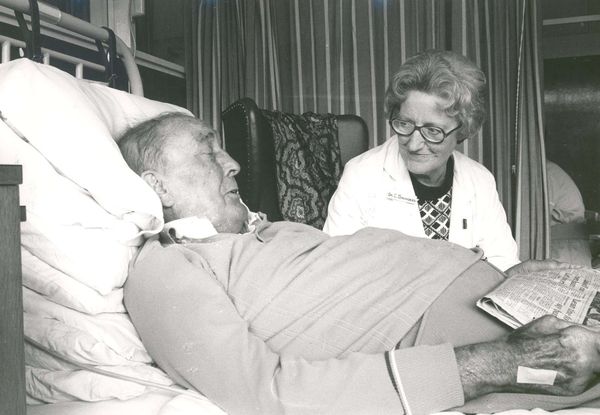
For our patients, preserving muscle is not about aesthetics or anti-aging—it’s about dignity, comfort, and independence. Low muscle strength increases fall risk, complicates wound healing, and contributes to fatigue. Patients with muscle wasting often struggle more with basic care needs, which increases caregiver stress as well.
The encouraging part is that small, tailored interventions can make a real difference:
• Bedside exercises with bands or light weights can preserve grip strength and mobility.
• Nutritional support, especially adequate protein intake, helps maintain lean body mass and healing.
• Attention to rest and recovery—supporting good sleep when possible—allows the body to repair and protect what muscle remains.
• Collaboration with PT, OT, and dietitians integrates muscle health into the broader care plan.
A Shift in Perspective
Thinking about “muscle as medicine” doesn’t mean prescribing gym workouts for hospice patients. It means recognizing that even gentle movement and adequate nutrition can slow decline, support independence, and reduce complications. For patients and families, it’s empowering to know that something as simple as hand exercises, assisted walking, or a protein-rich meal can add meaningful quality to their days.
Closing Thought
Palliative care is about much more than treating symptoms. It is about supporting the whole person—body, mind, and spirit. When we view skeletal muscle as medicine, we see another pathway to preserving what matters most: independence, resilience, and dignity at the end of life.
References
Srikanthan, P. & Karlamangla, A.S. (2014). Muscle mass index as a predictor of longevity in older adults. American Journal of Medicine, 127(6), pp.547–553.
Newman, A.B., Kupelian, V., Visser, M., et al. (2006). Strength, but not muscle mass, is associated with mortality in the health, aging and body composition study cohort. Journal of Gerontology: Medical Sciences, 61(1), pp.72–77.
Cruz-Jentoft, A.J., Bahat, G., Bauer, J., et al. (2019). Sarcopenia: revised European consensus on definition and diagnosis. Age and Ageing, 48(1), pp.16–31.
Argilés, J.M., Busquets, S., Stemmler, B. & López-Soriano, F.J. (2014). Cachexia and sarcopenia: mechanisms and potential targets for intervention. Current Opinion in Pharmacology, 22, pp.100–106.
Pedersen, B.K. & Febbraio, M.A. (2012). Muscles, exercise and obesity: skeletal muscle as a secretory organ. Nature Reviews Endocrinology, 8, pp.457–465.
Muscaritoli, M., Anker, S.D., Argilés, J., et al. (2010). Consensus definition of sarcopenia, cachexia and pre-cachexia: Joint document elaborated by Special Interest Groups of ESPEN. Clinical Nutrition, 29(2), pp.154–159.
Cruz-Jentoft AJ, Bahat G, Bauer J, Boirie Y, Bruyère O, Cederholm T, Cooper C, Landi F, Rolland Y, Sayer AA, Schneider SM, Sieber CC, Topinkova E, Vandewoude M, Visser M, Zamboni M; Writing Group for the European Working Group on Sarcopenia in Older People 2 (EWGSOP2), and the Extended Group for EWGSOP2. Sarcopenia: revised European consensus on definition and diagnosis. Age Ageing. 2019 Jan 1;48(1):16-31. doi: 10.1093/ageing/afy169. Erratum in: Age Ageing. 2019 Jul 1;48(4):601